Is War With Iran About Nuclear Stockpile Or Controlling the Strait of Hormuz?

Getty Images
Please Share This Story!
Listen to this article:
0:00
0:00

I posit that the war against Iran had nothing to do with nuclear material, but rather it was about gaining control of the Strait of Hormuz. That said, remember that the media is always reflective, not causative; whatever narrative it carries is never original.

The shift in press coverage is documentable by date, and it follows a pattern that any student of managed narratives should recognize immediately. The press did not discover the Strait of Hormuz. The Strait became the story when it became the problem, and when it became the problem, it needed to be renamed so it did not raise the wrong questions.

Let’s examine the progression of coverage.

Late January – February 27, 2026 (Pre-Strike, ~60 days ago)

The dominant press frame was entirely nuclear. Trump’s State of the Union on February 24 claimed Iran had restarted its nuclear program and was developing missiles capable of striking the U.S. Trump and his administration officials — Vance, Rubio, Witkoff — all accused Iran of building up its nuclear and missile programs to threaten the United States and its interests. The Strait of Hormuz was barely in the conversation. IMEC was not mentioned at all. The framing was the existential threat to American soil: nuclear warheads, ballistic missiles, regime terror.

The secondary frame was humanitarian: in January 2026, Iranian security forces massacred thousands of civilians in their crackdown on the largest Iranian protests since 1979. Trump used this to build the moral case alongside the security case.

The Strait was, at this stage, a footnote in wonk publications. No front pages.

February 28 – March 10, 2026 (Strike + Immediate Aftermath)

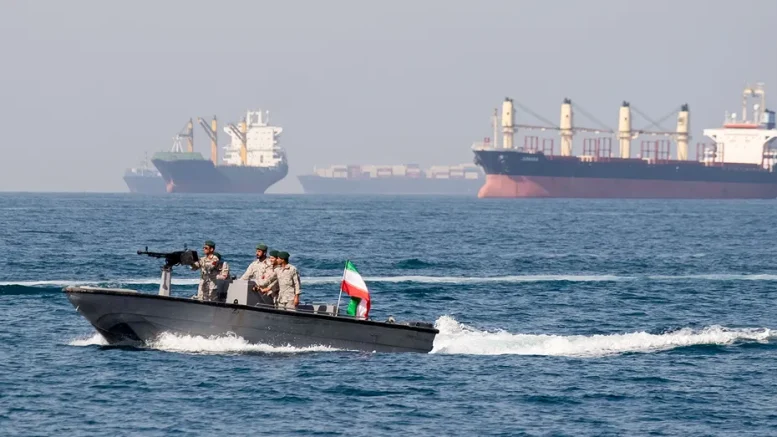
In announcing the onset of U.S. strikes, Trump said the goal was to “eliminate imminent threats from the Iranian regime,” listing objectives including destroying Iran’s ballistic missile arsenal, destroying Iran’s navy, ending Iran’s support for terrorist groups, and ensuring Iran does not acquire a nuclear weapon. Nuclear framing still led. The Strait entered the news cycle only because Iran made it the story: on March 2, a senior IRGC official confirmed the strait was closed, threatening any ship that passed through it. Press coverage of the Strait at this point was reactive — Iran did this, here are the consequences — not analytical. The question of why the U.S. went to war was still being answered with “nuclear weapons.”

March 10 – March 26, 2026 (The Economic Crisis Frame Emerges)

This is where the pivot happened. The 2026 Iran war, including the closure of the Strait of Hormuz, has led to what the International Energy Agency characterized as the “largest supply disruption in the history of the global oil market.” Oil broke $120 a barrel. Qatar declared force majeure. The oil production of Kuwait, Iraq, Saudi Arabia, and the UAE collectively dropped by a reported 6.7 million barrels per day by March 10, and by at least 10 million barrels per day by March 12. At this point, the press could not avoid the Strait. It was costing the global economy in real time.

But notice what happened to the nuclear narrative: it quietly became embarrassing. The IAEA reported on March 4 that satellite imagery showed “no damage to facilities containing nuclear material in Iran,” but some damage “at entrances” to Iran’s largest enrichment facility. In other words, the stated purpose of the war — destroying Iran’s nuclear program — was visibly not being accomplished. The press needed a different reason the war was justified, and the Strait provided it.

March 26 – April 7, 2026 (Hormuz Becomes the Primary Frame)

Trump said China is “very happy that I am permanently opening the Strait of Hormuz.” That sentence is the tell. “Permanently opening the Strait of Hormuz” is not the language of a president who went to war to stop a nuclear program. It is the language of a president who went to war to establish permanent control over a maritime choke point. The press, largely without connecting it to IMEC, began treating the Strait as the war’s central strategic objective. France announced the “Initiative for Maritime Navigation in the Strait of Hormuz,” with Macron’s office stating “freedom of navigation in the Strait of Hormuz is an immediate priority, particularly given the global economic consequences of this conflict.”

The nuclear program had been the justification. The Strait had become the objective — or rather, it had always been the objective, and the press was finally saying so, without knowing why.

April 7 – Present (Hormuz Dominant, Nuclear Almost Absent)

Trump was effusive in welcoming an announcement from Tehran that the Strait of Hormuz was “fully open and ready for full passage. Thank you!” The coverage is now almost entirely Strait-focused: ships seized, tankers fired upon, blockades implemented and lifted, ceasefire negotiations centered on Strait access terms. Iran’s chief negotiator stated bluntly: “It is impossible for others to pass through the Strait of Hormuz while we cannot.” The nuclear program has essentially disappeared from daily coverage.

What this shift actually means

The nuclear justification served its purpose: it provided the moral and security rationale that American public opinion required to accept military action. It was the entry ticket. But a nuclear program, once struck, is a past-tense story. The Strait of Hormuz is a present-tense story — it produces oil prices, food shortages, and economic pain that people feel directly, today.

What the press has never asked — and what remains entirely absent from U.S. coverage — is why “permanently opening the Strait of Hormuz” happens to be the precise strategic prerequisite for IMEC’s eastern sea lane to function as designed. I documented this explicitly in The New Economics of Technocracy. A Gulf shipping lane dominated by a hostile Iranian navy cannot anchor a trillion-dollar trade corridor. Removing Iran’s ability to threaten Hormuz was not a side effect of this war. It was the architectural requirement.

The press shifted from nuclear to Hormuz because events forced it to. It has not shifted to IMEC because no one in the mainstream press has connected those dots. The Strait of Hormuz is the what. IMEC is the why. The nuclear program was the excuse.

That sequence — excuse, what, why — is the oldest pattern in the management of public consent. And it is working precisely as designed.

Popular posts

About the Editor

Patrick Wood
Patrick Wood is a leading and critical expert on Sustainable Development, Green Economy, Agenda 21, 2030 Agenda and historic Technocracy. He is the author of Technocracy Rising: The Trojan Horse of Global Transformation (2015) and co-author of Trilaterals Over Washington, Volumes I and II (1978-1980) with the late Antony C. Sutton.
Subscribe
Notify of
guest

0 Comments
Oldest
Newest Most Voted
Inline Feedbacks
View all comments